ServicesRoof Inspections
Roof Inspections in Tuttle That Map Out the Years Ahead
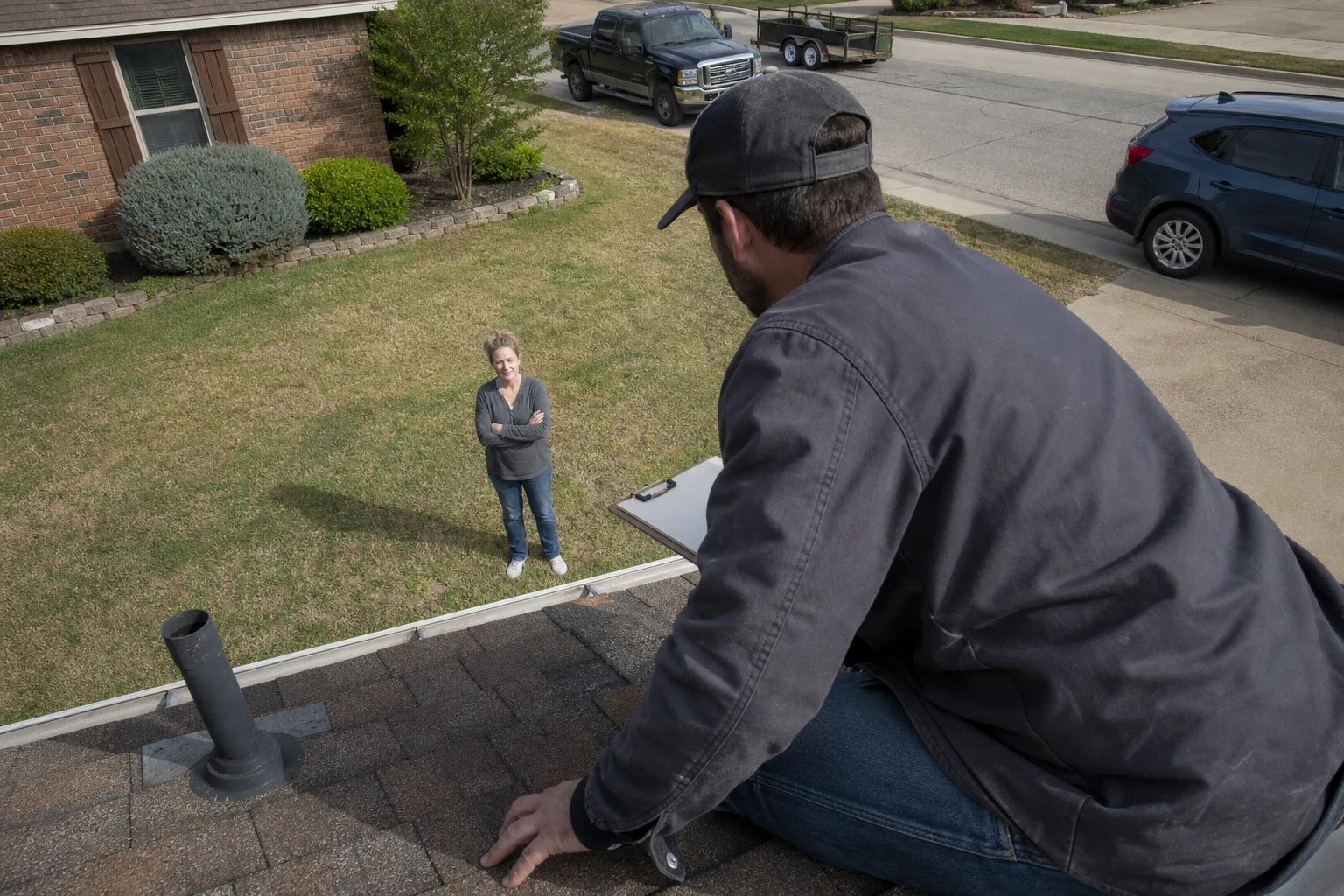
We walk your roof and look in your attic, then show you in photos what is sound, what needs attention soon and what can wait. You leave with a clear picture of your roof's condition and time to budget before a small issue becomes an urgent one.
What a Roof Inspection Gives You
Most roofs fail slowly. A cracked pipe boot, a lifted shingle tab or a gap in the flashing lets in a little water for months before a stain shows on the ceiling. An inspection finds those things while they are still small and inexpensive to correct.
Our approach is about planning. Rather than handing you a single verdict, we sort what we find into three groups: work worth doing now, items to watch, and the rough point when your roof will reach the end of its life. That lets you schedule roof repair on your terms and set money aside for a future roof replacement instead of being surprised by it.
Our team brings 30+ years of roofing experience to every inspection, and we hold an Oklahoma CIB roofing license. Spring hail and strong wind are part of life here, so an inspection after storm season is one of the simplest ways to keep a roof on schedule.
What We Check on Your Roof
Shingle surface and granules
We look for bare spots, bruising from hail, curling edges and granules collecting at the gutter outlets. Granule loss is how asphalt shingles age, and it tells us a lot about remaining life.
Flashing and penetrations
Chimneys, sidewalls, skylights and plumbing vents are where most leaks begin. We look closely at the metal around each one, the seal along its edges and the rubber collars on vent pipes. Those collars often split in the sun years before the nearby shingles give out.
Decking and fasteners
We walk the roof for soft or spongy areas that suggest wet decking underneath, and we watch for nail pops pushing up through the shingles.
Attic and ventilation
From inside the attic we look for daylight, water staining, damp insulation and signs of poor airflow. A hot, stuffy attic shortens shingle life, so ventilation matters as much as what you see from the yard.
Gutters and drip edge
We note sagging runs, loose hangers and water spilling behind the gutter onto the fascia. If your gutters need attention, we will say so plainly.
Signs It Is Time for an Inspection
- A hail or wind event has passed
- Hail damage is often invisible from the ground. A look soon after a storm gives you dated photos if you decide to talk with your insurance company.
- Your roof is past its midpoint
- Once a shingle roof is fifteen years or older, a regular check helps you see how quickly it is aging and when to start budgeting.
- You see granules or loose pieces
- Gravel-like grit in the gutters or shingle fragments in the yard mean the surface is wearing or something has broken loose.
- Stains or musty smells inside
- A faint ceiling ring or a damp smell in an upstairs closet can point to a slow leak above.
- You are buying or selling
- Knowing the roof's real condition before closing helps both sides plan honestly.
How the Inspection Day Goes
- 1
A short conversation first
When you reach us by phone, we ask about the roof's age, any past repairs and anything you have noticed. We agree on a time that suits you.
- 2
On the roof and in the attic
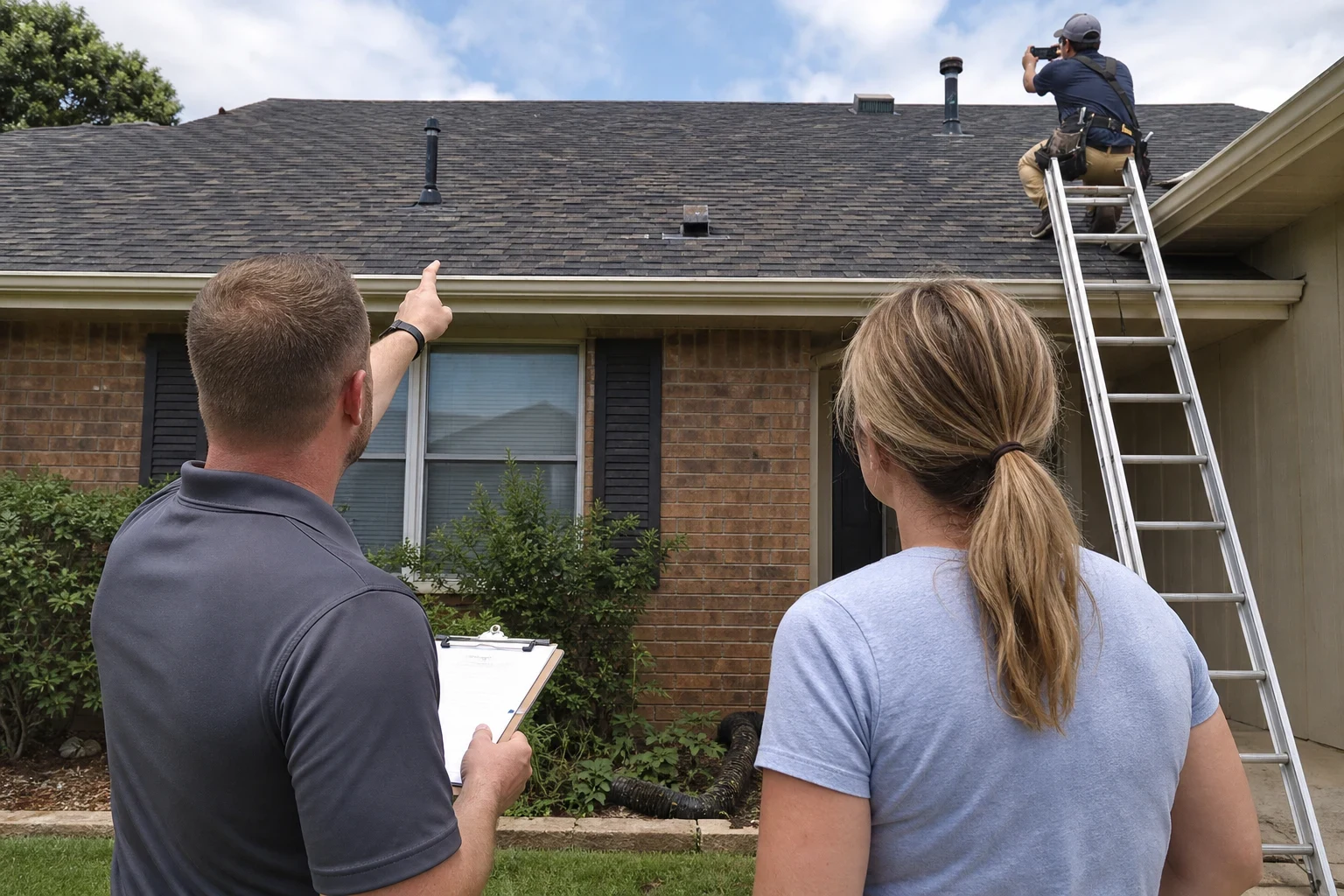
We set ladders carefully, walk the roof where it is safe to do so and photograph each area as we go. Then we check the attic with a light, looking at the underside of the decking.
- 3
Walking you through the photos
Before we leave, we sit down with you and go through what we found, picture by picture. You can ask anything, and we explain each item in plain terms.
- 4
A plan you can budget around
We lay out what needs attention now, what to watch and a realistic timeline for larger work. If nothing needs doing, we tell you that too.
What Shapes the Cost of an Inspection
An inspection is a modest part of owning a roof, and the price depends mostly on how much there is to look at and how easily we can reach it. We go over the cost by phone before we schedule, so there are no surprises on the day.
- Roof size and shape
- A simple gable roof takes less time than one with several valleys, dormers and ridges to trace.
- Pitch and access
- Steep slopes need extra safety equipment and care, and some areas must be checked from a ladder instead of on foot.
- Attic access
- A tight or blocked attic hatch takes more time to work through than an open walkway.
- Purpose of the visit
- A routine condition check differs from documenting storm damage, where we photograph more areas in detail.
Roof Inspection Questions
- How often should my roof be inspected?
- For most shingle roofs, once a year is a sensible rhythm, plus a visit after any significant hail or wind. Newer roofs can go a little longer between checks. Older roofs benefit from yearly visits because they change faster.
- Will you try to sell me a new roof?
- No. An inspection is meant to tell you the truth about your roof, and often that means a few small repairs or simply nothing at all. When a roof is near the end of its life, we say so and give you time to plan rather than pressing for a decision.
- Is the inspection useful if I end up filing an insurance claim?
- It gives you a dated record to work from. We photograph any damage and write down where it sits on the roof, so you have something concrete to show. We can walk you through how claims usually unfold, but the adjuster decides what is covered. If the roof needs storm damage repair afterward, we can talk that through too.
- Do I need to be home?
- It helps if you are, especially for the attic check and the walkthrough of photos afterward. If that does not work, we can arrange attic access in advance and go over the findings with you by phone.
- Why should I trust your assessment?
- We have 30+ years of roofing experience and hold an Oklahoma CIB roofing license. More practically, we show you photos of everything we mention, so you can see the condition of your roof for yourself.
Know Where Your Roof Stands
We inspect roofs across Tuttle, Mustang, Newcastle, Blanchard and nearby towns. A short phone call is all it takes to set a time and talk through what you have noticed.