ServicesRoof Replacement
Roof Replacement in Tuttle, Planned Before It Turns Urgent
A new roof is easier on your budget and your nerves when you choose the timing. We look at what your current roof has left, explain your material options and lay out the cost line by line, so you can plan the work instead of reacting to a leak.
When Replacing Makes More Sense Than Repairing
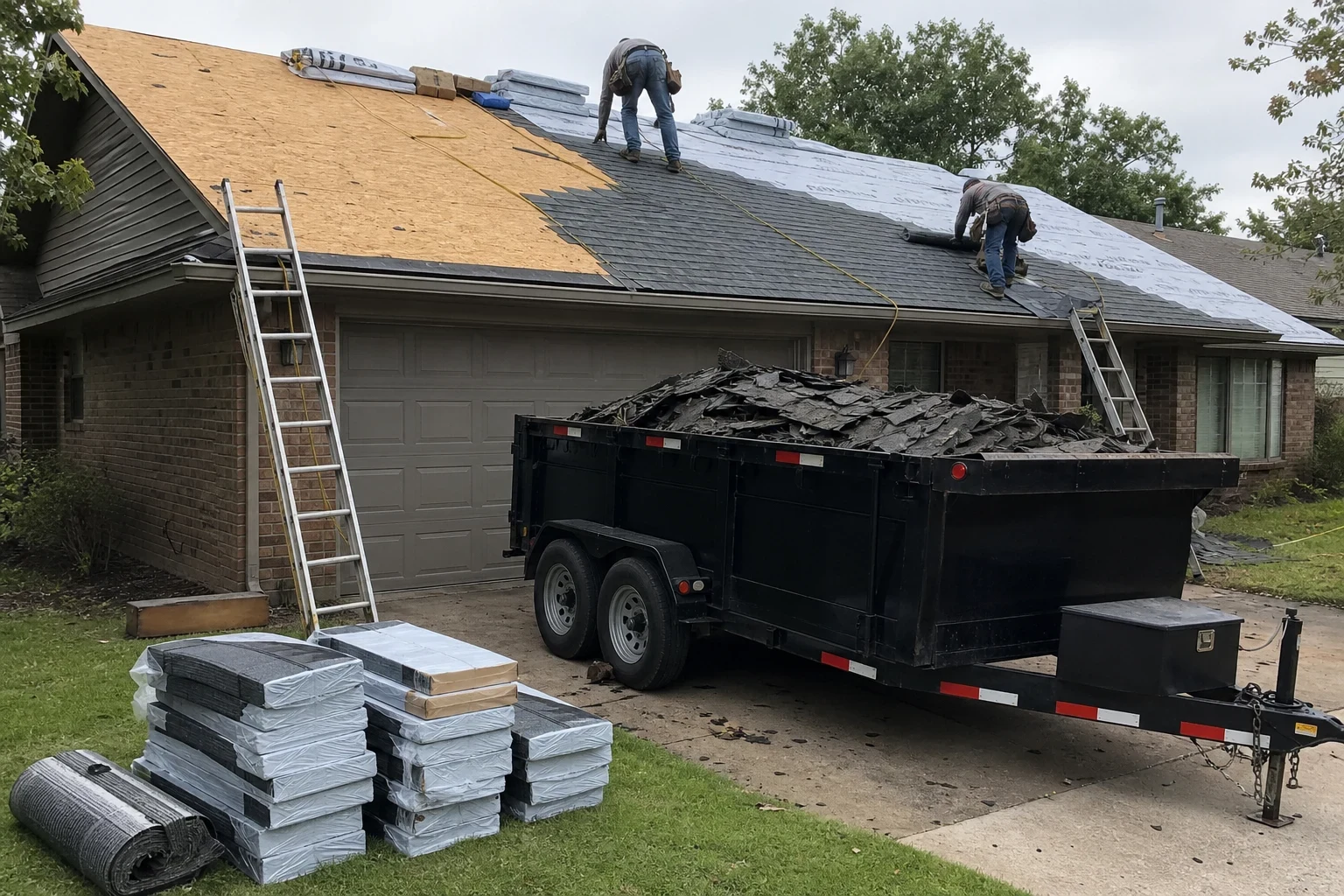
Most roofs give plenty of notice before they fail. Shingles shed their granules, edges curl, and repairs start coming closer together. At that stage another patch often buys a season, not years. A full replacement resets the clock: new decking where it's needed, new underlayment, new flashing and a roof system that works together.
We hold an Oklahoma CIB roofing license and bring 30+ years of roofing experience to every replacement. That experience mostly shows up as restraint. If your roof still has good years in it, we'll tell you and point you toward roof repair instead. If it doesn't, we'll help you pick a sensible window, often before spring hail season, and budget for it calmly.
What a Full Replacement Includes
- Complete tear-off
- We remove the old shingles and underlayment down to the deck. Layering new shingles over old hides problems and shortens the life of the new roof, so we don't do it.
- Decking check and repair
- Once the deck is bare, we walk it and replace any soft, delaminated or water-stained sheathing. You see photos of what we found before it's covered again.
- Underlayment and ice and water barrier
- Synthetic underlayment goes across the deck, with a self-sealing barrier in valleys, at eaves and around penetrations where water collects and freezing rain can back up.
- New flashing and vents
- Chimney, wall and pipe flashing is replaced rather than reused. We also look at intake and exhaust ventilation, because a hot, stale attic ages shingles from underneath.
- Shingles installed to the manufacturer's spec
- Nail placement, starter strips and ridge caps are done to the written installation instructions. Those small details decide how a roof holds up in strong wind.
- Cleanup and a final look together
- We sweep the yard and driveway with magnets, haul away debris and go over the finished roof with you.
Signs Your Roof Is Ready to Be Replaced
Granules in the gutters
A steady gray grit in your gutters or downspouts means the protective surface of the shingles is wearing away and the asphalt beneath is exposed to sun.
Curling, cupping or cracked shingles
Shingles that lift at the edges or split across the tab no longer seal down. Wind gets under them easily.
Repairs piling up
If you've patched the same roof two or three times in a few years, the money may be better spent toward a new system.
Age of the roof
An asphalt roof approaching twenty years is worth planning for even if it looks fine from the yard. Hail and summer heat take a quiet toll.
Sagging or soft spots
A dip in the roofline or a spongy feel underfoot points to deck damage. That calls for a closer look soon.
How Your Replacement Comes Together
- 1
A careful look first
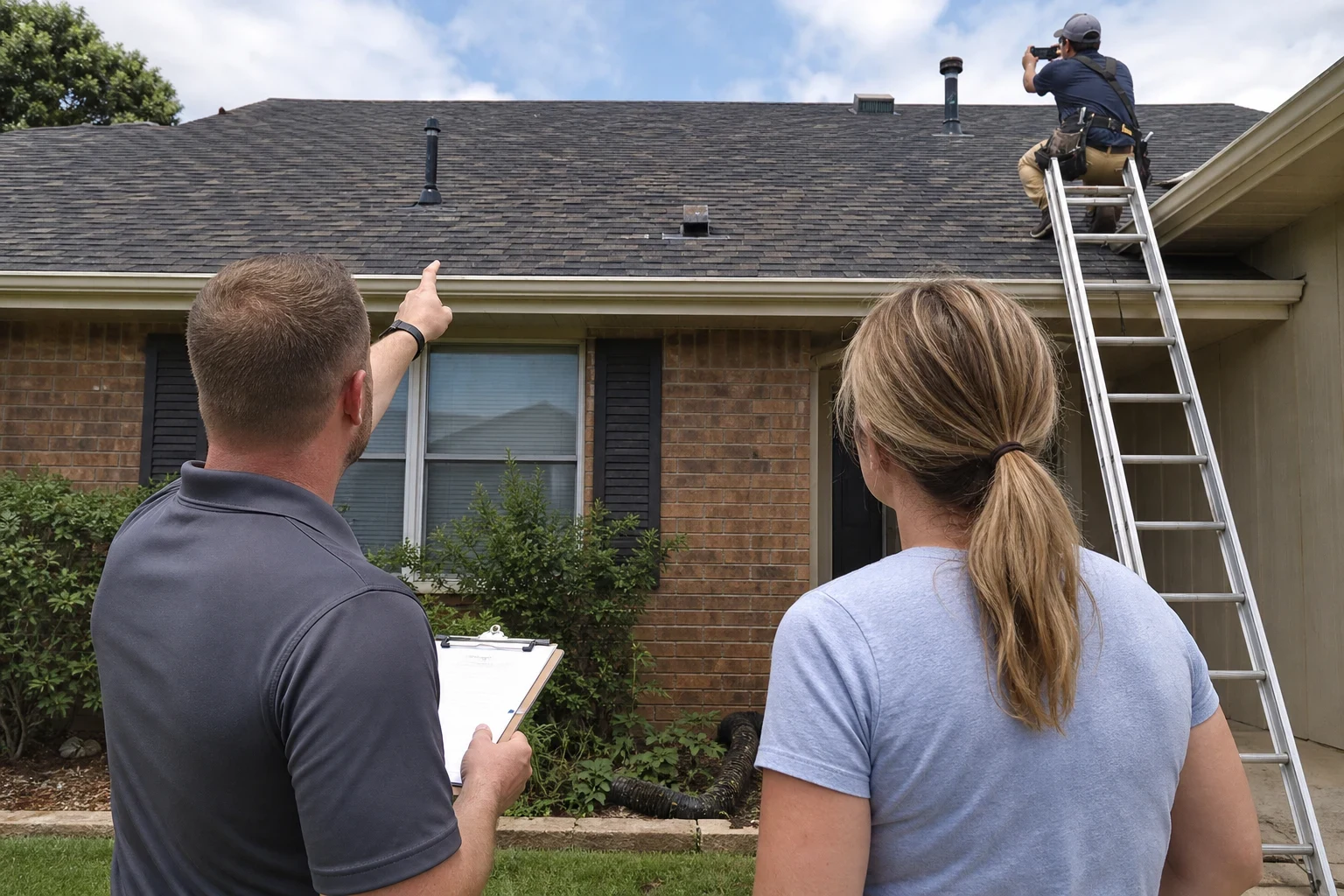
We inspect the roof surface, the attic and the flashing, then photograph what matters. If you'd rather start smaller, a standalone roof inspection gives you the same information without any commitment.
- 2
Options and a written estimate
You get your options in writing, with materials, decking allowance, ventilation and disposal itemized. We explain the tradeoffs between shingle lines in plain terms and leave you time to decide.
- 3
Scheduling and permits
We set a date that suits your plans and the forecast, and we pull any permit your town requires. Before work day, we let you know where the dumpster will sit and what to move from the driveway.
- 4
Work day
Tarps go over landscaping, the tear-off begins early, and the deck is dried in by evening. Most homes are finished in one to two days, weather allowing.
- 5
Handover
Before we call the job done, you join us for a look along the roofline and around the yard. Ask anything that comes to mind, and keep the photos we took of the layers now hidden under the shingles.
What Moves the Price of a Replacement
Your number comes from measuring your own roof and seeing what's on it, never from a generic table. Once you know which details carry the most weight, setting money aside a season or two early gets much easier. Every item below appears separately on the estimate we hand you.
- Roof area and slope
- The footprint of your roof decides how many bundles, how much underlayment and how many crew hours the job needs. A steep slope calls for harnesses and roof jacks and a slower, more deliberate pace, and that time is reflected in labor.
- The shingle line you choose
- Architectural shingles, impact-rated lines and heavier designer profiles sit at different price points. They also differ in how well they shrug off hail, which can matter as much as the upfront figure.
- What the deck looks like underneath
- Soft or rotted sheathing only shows itself once the old shingles come off. We quote a set price per sheet ahead of time, so any replacement boards are a known amount rather than a surprise.
- Old layers and roof features
- A second or third layer of old shingles means more tear-off time and heavier disposal. Dormers, valleys, skylights and chimneys each need their own flashing, and that detail work adds hours.
- Attic ventilation changes
- Adding ridge or soffit vents raises today's cost a little. In return, a cooler attic keeps the new shingles from baking from below.
Roof Replacement Questions
Something not covered here? (572) 228-3206
How far ahead should I plan a roof replacement?
If your roof is showing its age, a few months ahead is ideal. That gives you time to compare materials, set money aside and pick a date with good weather. Waiting until there's an active leak narrows every one of those choices.
Will insurance pay for a new roof?
Sometimes, when the damage comes from a covered event like hail or wind rather than age. We can document what we see and explain how a claim generally works, but your adjuster decides coverage. If storms are the reason you're asking, our storm damage repair page covers that process.
Do I need to be home during the work?
Not necessarily. We do ask that cars are out of the driveway and that you're reachable by phone in case we find damaged decking that needs your approval. Pets are usually happier indoors or away for the day.
Should I replace my gutters at the same time?
If your gutters are sagging, leaking at the seams or undersized, doing them right after the roof is efficient. The drip edge and fascia are already exposed. We handle gutters too and can price both together.
How do I know your work holds up?
Our company carries a BBB A+ rating, and we photograph the layers underneath so you can see what was installed. We also go over the finished roof with you before we call the job complete.
Start Planning Your Next Roof
Tell us about your roof and when you'd like the work done. We'll set up a visit, look things over and give you a written plan you can budget around.